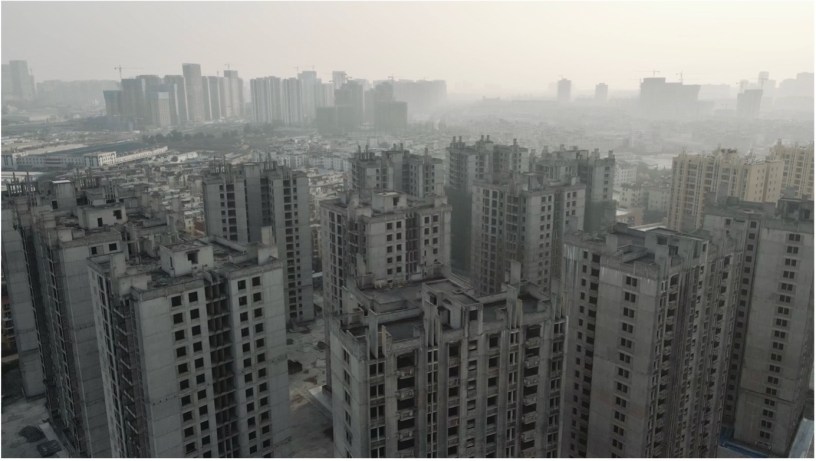
Just three underground stops from Kunming’s city centre, a cluster of apartment buildings loom like concrete pillars against a grey sky. At first sight, these structures appear to epitomise the remarkable real estate boom that defined urban China. However, a closer look reveals a scene reminiscent of a post-apocalyptic wasteland rather than architectural splendour.
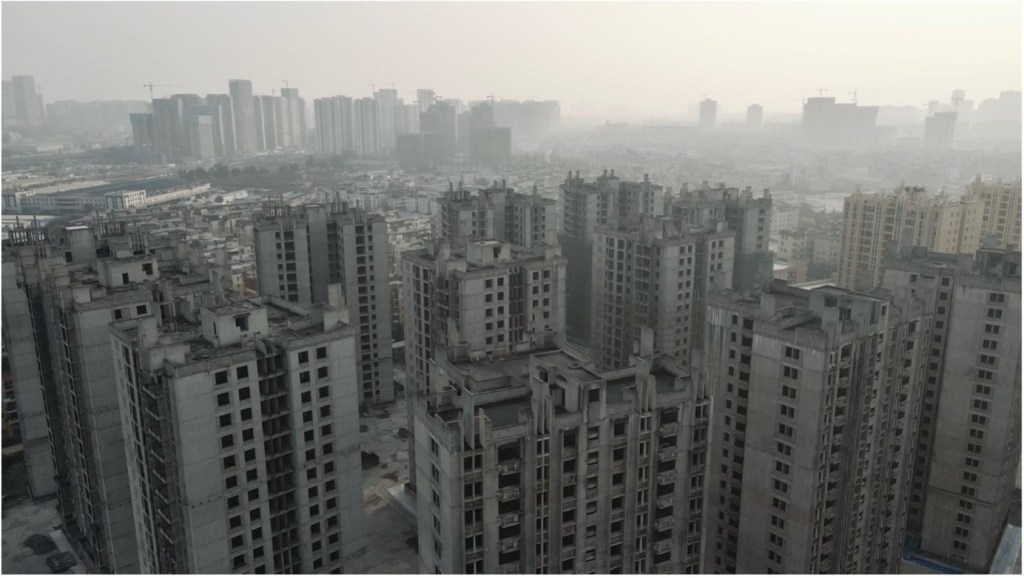
Unique Happiness City, a pre-sale residential property project launched in Kunming, Yunan Province, Southwest China, was initiated as part of the city’s ambitious Urban Transformation Initiative in 2013. Following his appointment, Party Secretary Qiu He in 2011 initiated the renovation of 382 urban villages in Kunming within three years. Until 2014, 229 urban villages had been demolished, awaiting their modern transformation into high-rise apartment towers or high-end business districts once promised by the leadership. Unique Happiness City is one of them.
However, Unique Happiness City’s construction halted abruptly in March 2015 due to a disruption in the property company’s capital chain, leaving people’s dream homes as unfinished buildings with decaying frameworks. This halt coincided with the political turmoil marked by the investigation and subsequent downfall of Qiu He for serious political violations (see here and here). By this point, while transformation had begun in 229 urban villages, only 30 had been fully developed. Qiu’s fall from political grace did not just mark the end of an era of urban transformation in Kunming but left numerous half-demolished or half-built projects in limbo, burdening developers with unresolved debts and developmental challenges. Unique Happiness City is just one of them.
These unfinished buildings stand as scars on the face of a bustling city, a visual reminder of urban dreams unachieved. Under the leadership of Qiu, Kunming’s urban transformation was emblematic of a broader national ambition to reposition the city from a peripheral status to a dynamic international nexus, capitalising on its geographical proximity to Southeast Asia. Locally, the extensive urban overhaul served as a political springboard for Qiu, showcasing his efficacy in governance and propelling his political career. Economically, the local government exploited land use sales to developers as a lucrative revenue stream, funding infrastructure and public works. These motivations, however, are inherently speculative. In pursuit of rapid economic and political gains, the radical approach involving the wholesale destruction and reconstruction of 382 urban villages within three years was preferred by the local government to relatively gradual renewal strategies such as renovation or restoration. The narrative of urban development in Kunming is thus situated in the belief that true progress can only be achieved through a rapid knockdown of the past so that the new and modern can be built on the ruins.

In Kunming’s quest to redefine its urban landscape, a symbiotic and often opaque coalition has emerged, knitting together the interests of local governments, emerging developers, and financial entities. To meet the demand of transforming 382 urban villages into modern developments, local authorities strategically lowered entry barriers in the real estate market. This enabled many smaller, emerging developers, who typically lacked the robust financial resources and operational expertise found in more established firms, to participate in these large-scale redevelopment efforts. Among these was Jiadali Real Estate, which transitioned from a demolition company to a front-runner in the Unique Happiness City project.
The financial landscape for these developers was crucially shaped by the 1995 Urban Commercial Housing Pre-sale Management Measures, which revolutionised real estate financing in Mainland China by allowing the pre-sale of properties under construction. This policy was leveraged by emerging developers in Kunming to secure the liquidity needed for ongoing construction and continuous acquisition of large expanses of urban village land. However, the permissive regulatory environment of the 2010s saw lax enforcement of these measures, potentially allowing developers to access pre-sale funds prematurely. To further strengthen their financial positions, small-sized local developers diversified their funding sources to include not only pre-sale revenues but also short-term bank loans and informal lending mechanisms. This approach necessitated a cyclical pattern of borrowing and repaying, with informal loans often used to settle bank debts at the fiscal year-end. Yet, such practices highlight a precarious financial balancing act that, while sustaining ongoing operations, raised concerns about long-term financial health and transparency.
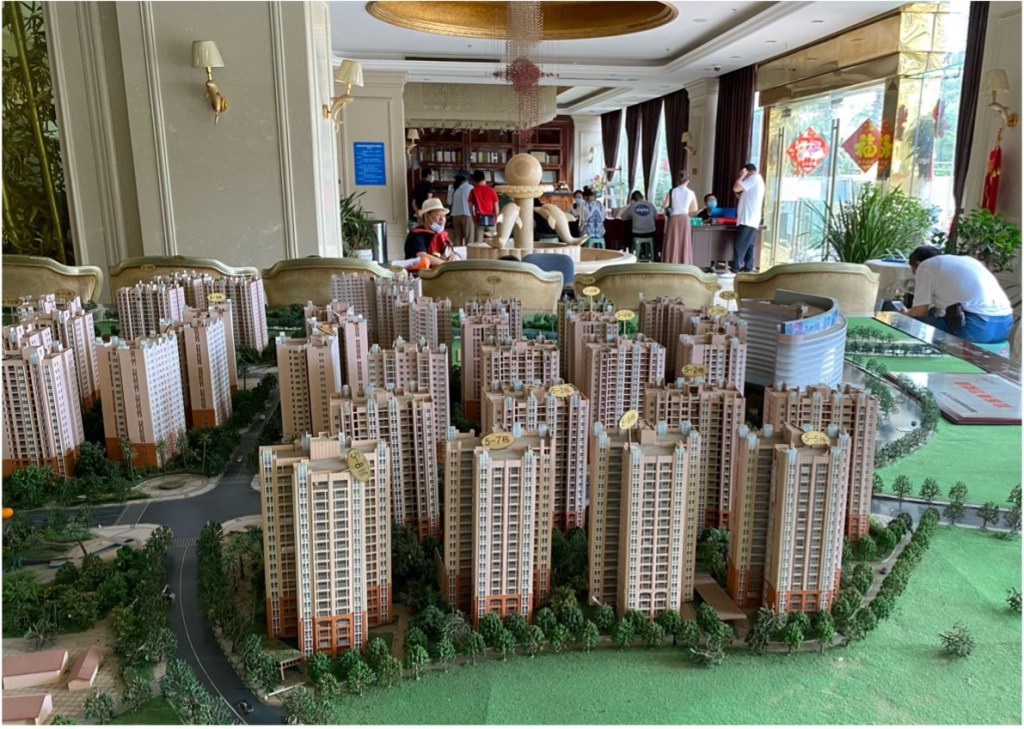
Each stakeholder in this coalition appears to have benefited from the rapid pace of urban development. Developers advanced their ongoing projects and continuously secured new land, banks profited from interests on both developer loans and homebuyer mortgages, and informal lenders capitalised on high-interest rates from private debts. In turn, each participant’s profit-seeking behaviours collectively maintain a continuous flow of capital to sustain the local leadership’s developmental and political ambitions.
The fragile nature of urban growth coalitions becomes apparent when central government support wanes. This was exemplified in March 2015, coinciding with the close of the National People’s Congress, when the Central Commission for Discipline Inspection announced that Qiu He was under investigation for serious violations of discipline and law (see here and here). In the same month, the Yunnan provincial government issued several regulations that halted the Kunming urban village redevelopment that had been underway for five years. The situation was further complicated by the tightening of financial regulations when the Chinese State Council implemented severe controls on shadow banking in 2014. Traditionally reliant on high-interest, informal loans to manage year-end bank obligations in anticipation of new funding, these developers were left without the expected bank loan renewals in 2015 due to stringent national financial risk controls. By the end of 2015, coupled with Qiu’s political downfall, the credit crunch led to bankruptcy for 125 local developers in Kunming, including Jiadali Real Estate, and triggered a cascade of failures among small loan companies.
The growth coalition thus burst, leaving the homeowners of Unique Happiness City bearing the brunt of its collapse. Urban villagers were displaced from their village land with promises of compensation through newly built apartments. These promises turned hollow when the projects floundered, leaving the villagers dispossessed of their ancestral homes and without the compensation they were assured. Commercial house buyers, whose housing investments failed to materialise into inhabitable assets, faced the added burden of servicing mortgages on uninhabitable properties, with the threat of being blacklisted as untrustworthy borrowers for non-payment. Both groups found themselves deprived of the financial stability and the living security traditionally associated with property ownership.
The aftermath of Qiu’s urban transformation initiative has left Kunming contending with not only numerous unfinished construction sites but also a deep-seated reliance on land finance. The numbers paint a stark picture. Investment in Kunming’s secondary industries totalled a mere 65 billion yuan in 2015, accounting for only 18% of the annual total fixed asset investment, while real estate development investment soared to 1,451 billion yuan, accounting for 41% of the total investment (see China Statistical Yearbook). This pronounced emphasis on real estate highlights a risky reliance on property-led growth – a strategy that once propelled Kunming’s GDP to an impressive average annual increase of over 13% between 2009 and 2014 (see China Statistical Yearbook). However, by 2015, following the collapse of the growth coalition, Kunming’s GDP growth plummeted to 8.1%, and its annual fiscal revenue growth sharply declined from over 20% to just 8.4% (see China Statistical Yearbook).
In recent years, the new leadership in Kunming has facilitated the acquisition of some unfinished projects by prominent Chinese real estate firms, further regulated the management of pre-sale housing funds, and established dedicated funds to support the completion of stalled constructions. Yet not all ‘unfinished’ legacies have been fortunate enough to be incorporated into Kunming’s revitalised development plans. For example, Unique Happiness City remains mired in construction ruins, awaiting its redefined urban future.
A resident of Unique Happiness City contemplates the irony tangled in the name of her would-be home. “If the building is ever completed,” she ponders, “the word ‘Unique’ should be removed, just leave it simply as ‘Happiness City’. But then, what is happiness?” Indeed, behind the motivation of speculative urbanism, while some stakeholders seek ‘happiness’ in accumulating wealth or power, the fundamental desires of the intended residents – those of us who just wanted a home to call our own – seem overlooked. If developers and policymakers can genuinely prioritise the needs and aspirations of citizens over property-led economic incentives and performance-led political gains, they might transform these unfinished skeletons of buildings into vibrant homes and communities. Thus, no longer will these structures serve as mere relics of failed ambition but as cornerstones of a thriving, equitable and resilient urban life.
About the author
Tianzi Li was a student enrolled in the MSc programme in Human Geography and Urban Studies (Research) in the Department of Geography and Environment at the London School of Economics and Political Science (LSE) in the 2023/24 academic year.
 Urban Asia Blog